
CREATORSEAL™ vs Notary

A notary can witness a signature. CREATORSEAL™ documents the exact digital file before you share it.
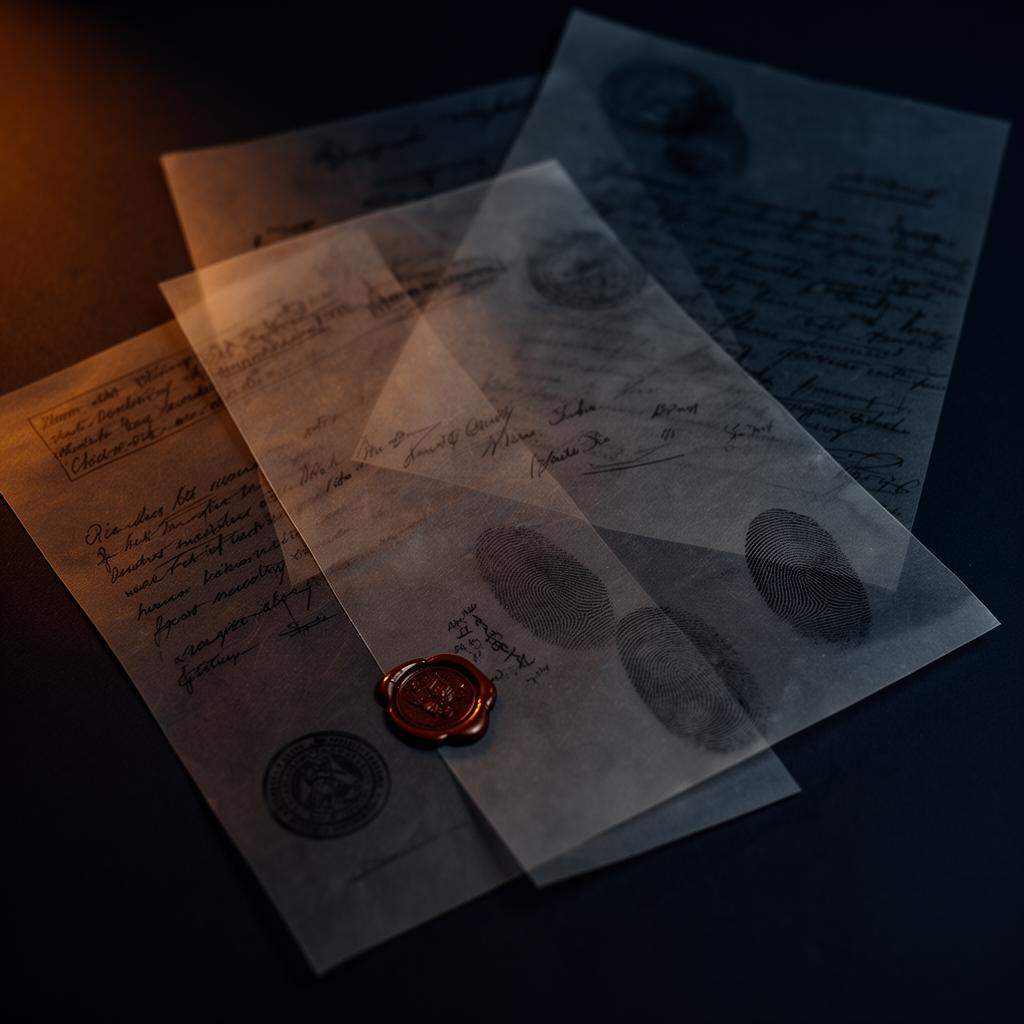
A notary can verify that a person signed or acknowledged a document. CREATORSEAL™ verifies that a specific digital file existed in a specific form at a specific time. They solve different evidence problems, but together they can create a stronger record than either one alone.
What a Notary Actually Does
A notary public is an official authorized by state law to verify identity, witness signatures, and certify or acknowledge documents. The core function is identity and acknowledgment: a notary confirms that the person signing is who they say they are, and that they are signing of their own free will. That verification is what gives a notarized document its weight — a neutral third party was present and witnessed it.
What a notary does not do: a notary does not evaluate the creative originality of your work, does not create a cryptographic fingerprint of a digital file, and does not automatically prove who authored the underlying content. A notarized document proves a person was present and signed. It does not prove they created the work attached to that signature, when they created it, or whether the file has been altered since.
What CREATORSEAL™ Does
CREATORSEAL™ generates a SHA-384 cryptographic fingerprint of your file directly in your browser — the file never leaves your device. That fingerprint is then timestamped using RFC 3161, an open internet standard for trusted timestamps issued by an independent Timestamp Authority. The result is a proof record tied to the exact version of that file at that exact moment in time.
After sealing, CREATORSEAL™ produces a Receipt of Provenance Record and an Evidence Bundle. The receipt summarizes what was sealed — file fingerprint, Seal ID, timestamp, and name on record. The evidence bundle contains the machine-verifiable cryptographic data that can be independently checked by anyone, at any time, without an account. What CREATORSEAL™ does not do: it does not notarize signatures, does not verify identity, does not create legal rights, and does not provide legal advice.
Where They Overlap
Both a notary and CREATORSEAL™ can be part of a larger evidence trail. Both are more useful when used before a dispute than after one starts. And both introduce an element that is outside your own claim — an independent record that does not rely solely on your word.
- Both create records that can be referenced later in a dispute or legal process.
- Both are stronger when used proactively, before an issue arises.
- Both can be part of a broader documentation strategy.
- Both add credibility because they involve something independent of the creator's own assertion.
Where They Are Different
The differences are meaningful. Choosing the right tool depends on whether the question is about a person's signature or a file's existence and timing.
- A notary verifies a person's identity and witnessed signature. CREATORSEAL™ verifies the exact content and fingerprint of a digital file.
- A notary records the act of signing a document. CREATORSEAL™ records that a specific file version existed at a specific moment before it was shared.
- A notarized record does not preserve version history. CREATORSEAL™ can document drafts and revisions — sealing multiple versions builds a timeline that shows how the work developed.
- A notary typically requires you to present the document directly. CREATORSEAL™ fingerprints files locally without uploading them — your unreleased work never leaves your device.
- Notarization is human-witness based and often requires physical presence. CREATORSEAL™ is cryptographic and independently verifiable by anyone who has access to the open standard.
- A notary stamp does not prove who authored the content, only who signed at that moment. A CREATORSEAL™ proof record documents that a specific file existed in a specific form before a specific point in time.
When to Use a Notary
A notary is the right choice when the issue is identity, acknowledgment, or witnessed signing. Common situations include:
- A contract, agreement, or formal statement that requires a witnessed and certified signature.
- An affidavit, declaration, or sworn statement that needs to be notarized before it can be filed or submitted.
- A government form, legal filing, or financial document that specifically requires notarization.
- A client, court, institution, or counterparty that explicitly requires notarized paperwork.
- A situation where the central question is 'did this person sign this?' — not 'did this file exist before a specific date?'
When to Use CREATORSEAL™
CREATORSEAL™ is the right choice when the issue is file identity, version, and timing. Common situations include:
- You want documented proof that a specific file existed before you shared, sent, or published it.
- You need a timestamped record of a draft, design, song, pitch deck, manuscript, image, or other digital file.
- You want to document version history — sealing multiple drafts over time builds an evidence chain showing how the work developed.
- You do not want to upload or expose the original file. Fingerprinting happens locally in your browser.
- Someone may later ask: 'What exactly did you have, and when did you have it?' — and you want an independent, verifiable answer on record before the question ever comes up.
When to Use Both
There are situations where both tools belong in the same workflow. They address different questions, which means they do not compete — they layer.
- You are executing a contract and want proof of the exact file version being signed. Seal the final PDF before signing, then have the signature notarized. The seal documents what was agreed to. The notary documents that the parties signed.
- You are developing a creative project that will end in a formal agreement. Seal drafts and working files throughout development to build an evidence chain, then notarize the final signed agreement when it is ready.
- An attorney advises you to create a notarized declaration about a creative dispute. Seal the underlying files before engaging your attorney — so the file-level proof already exists. If a notarized declaration is later prepared, the notary certifies that signature separately.
- You are delivering creative files to a client under a signed agreement. Seal the deliverables to record exactly what was handed over. If the agreement requires a witnessed signature, notarize that separately.
The key distinction: CREATORSEAL™ documents what the file was and when it existed. A notary documents that a person signed. Both can be true at the same time, and together they cover more of the evidence picture.
Practical Creator Scenarios
Here is how the two tools fit into real situations creators face:
- Founder pitch deck: A founder seals the deck before sending it to investors — creating a timestamped record of exactly what was in the pitch before any meetings. If the same concept later appears in someone else's product, the sealed record stands independently. If an attorney later recommends a notarized declaration, the sealed file record is a separate layer that already exists.
- Songwriter collaboration: A songwriter seals a demo before sharing it with a producer or vocalist. The proof record documents that specific audio file before it left their device. If the collaboration leads to a formal agreement, that contract can be notarized separately — the two records serve different purposes and do not interfere with each other.
- Designer client submission: A designer seals the final design files before delivery. This creates a timestamped record of exactly what was handed over. If the project involved a signed statement of work, the notary certified the signature on the contract — the seal documented the files themselves.
- Signed agreement or affidavit: When a formal sworn statement is required — confirming authorship, ownership, or the conditions of a deal — notarization is the right tool. A notary certifies the signature on the declaration. CREATORSEAL™ can document the underlying creative files separately as a parallel record.
- Photographer licensing packet: A photographer seals a batch of original images before sending a licensing packet to a publisher. Each file gets its own timestamped proof record documenting the exact version of each image. If the licensing agreement requires a notarized signature, that is a separate step for the contract itself.
Important Disclaimer
CREATORSEAL™ is not a notary service, not a law firm, and not a provider of legal advice. It does not verify identity, witness signatures, or issue notarized documents. CREATORSEAL™ creates file-based cryptographic proof records — not notarized certifications. If your situation requires notarization, consult a licensed notary public. If it requires legal advice, consult a qualified attorney. The two tools address different evidence problems and are not substitutes for each other.
Understanding these distinctions is not about being paranoid — it is about making informed decisions before you share your work. The best time to build your proof trail is before anyone else has seen the file.
Seal the file before you share it.
Build the proof record before the file leaves your hands. The timing is what makes it count.