
What Proof Looks Like for Music Creators
A realistic walkthrough of what happens when a producer seals beats before sending them out.
Tap to Watch the Walkthrough
Seal ID
Issued
Status
Protected
Record
Verifiable
The Scenario
An independent producer — call him Darius — has been building a beat pack with intention. Eight instrumentals, each shaped for a specific artist he has been trying to get in front of for months. The A&R has asked for a preview. That kind of message can open a door: a placement, a relationship, a real career step. But it also means the music is about to leave his hard drive.
He has heard the stories for years. A producer sends a pack. The artist passes. Then a few months later a track drops with the same melody, the same drum pattern, a slightly different mix — and no credit. In music, recognition is not proof.
Darius is not sealing because he assumes bad faith. He is sealing because once the file leaves his hands, what happens next depends on factors he cannot control. He would rather have documentation than wish he had created it later. So he seals before he shares.
The Files Being Sealed
- Primary file: midnight-pack-preview.zip (containing 8 WAV bounces)
- Size: 312 MB
- Type: Beat pack — instrumental bounces at 44.1kHz/24-bit
- Version: Final preview bounces, tagged and mixed for artist review
- Working title: "Midnight Pack"
- Additional seals: Each of the 8 WAV files sealed individually, plus the DAW project files (.flp / .als / .logicx) for the three instrumentals that have active development versions
What Happens During Sealing
Darius seals the files on a Friday night — two hours before he uploads the pack to the shared Google Drive link the A&R sent him. He drops each file into CREATORSEAL™ one at a time. The entire process takes a few minutes across all twelve files.
- Local fingerprinting. CREATORSEAL™ computes a SHA-384 cryptographic hash of each file's contents entirely within his browser. The audio never leaves his laptop.
- RFC 3161 timestamp. Each fingerprint is submitted to an independent Time Stamping Authority, which records the exact UTC time and issues a signed timestamp token. The time is set by the authority — it cannot be supplied or adjusted.
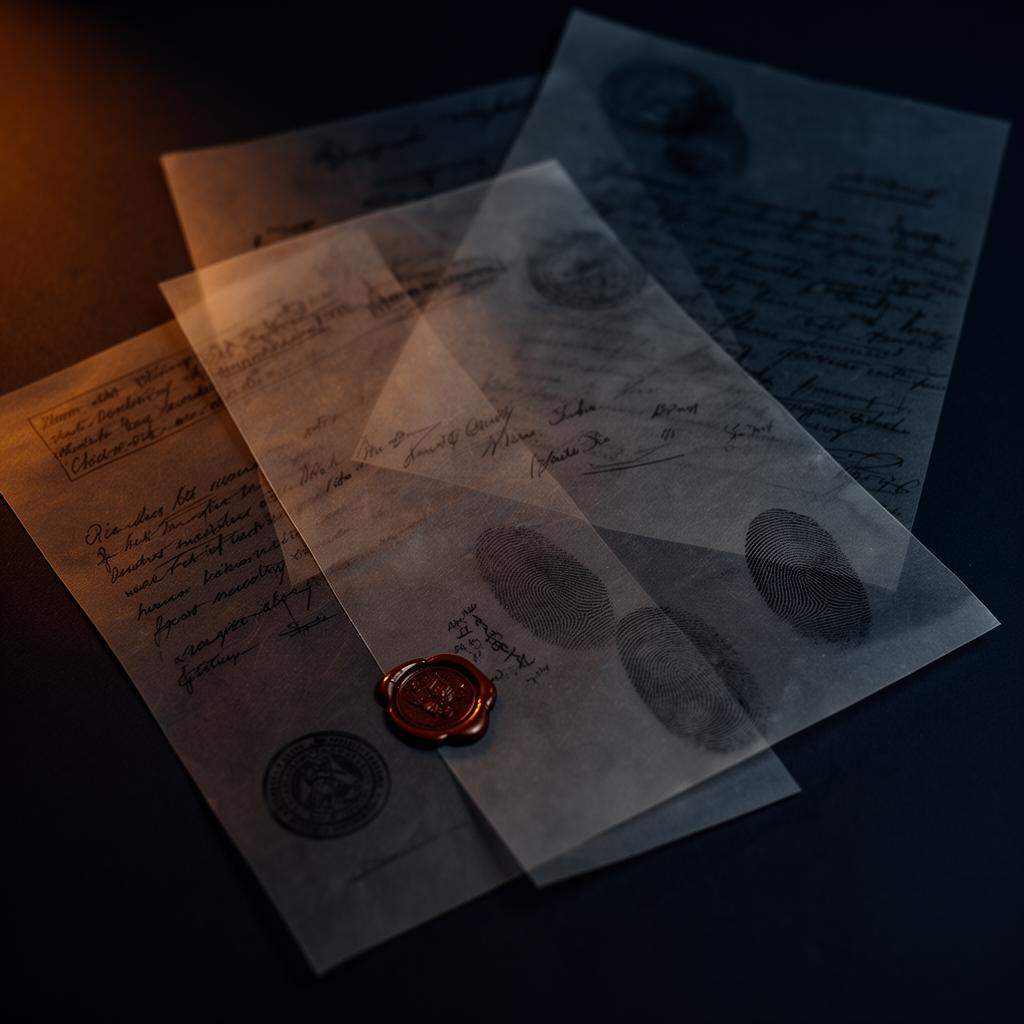
- Two artifacts produced per file. CREATORSEAL™ generates a Receipt of Provenance Record — a human-readable summary containing the fingerprint, Seal ID, timestamp, and name on record — and an Evidence Bundle, the machine-verifiable cryptographic proof material that any third party can independently check.
Because he sealed the ZIP and each WAV individually, he has a separate proof record for every file. If one beat later comes into question, he can point to the specific Seal ID, fingerprint, and timestamp for that track alone.
What He Has After Sealing
- Seal IDs: A unique identifier for the ZIP, for each individual WAV, and for each DAW project file — one per sealed file.
- SHA-384 fingerprints: Cryptographic hashes of every file's exact contents at the moment of sealing.
- RFC 3161 timestamps: Signed timestamps from a trusted authority recording the exact UTC time for each seal event.
- Receipt of Provenance Record per file: A human-readable summary for each sealed file — shareable with a lawyer, manager, or label as a reference point without sending the audio itself.
- Evidence Bundle per file: Machine-verifiable cryptographic proof material for independent checking of each sealed version.
- Version metadata: Version label (preview-bounces-for-AR-review), project name, and optional notes attached to each record.
If Darius continues sealing as the project evolves — stem packs, alternate mixes, revised arrangements — each new seal adds to a documented proof chain. That chain shows which version existed when, independent of any platform, streaming service, or collaborator account.
What Can Be Independently Verified
Because each Evidence Bundle contains all the cryptographic proof material, anyone — including a lawyer, manager, or label who was not present during sealing — can independently verify the following:
- File integrity: Does the WAV or ZIP Darius holds today produce the same SHA-384 fingerprint that was sealed? If yes, the file has not changed since sealing.
- Timestamp authenticity: Was the RFC 3161 timestamp issued by a legitimate Time Stamping Authority at the recorded time? This can be checked against the authority's public certificate chain.
- Seal consistency: Do the Seal ID, fingerprint, and timestamp all correspond to the same recorded seal event for that specific file?
The verification does not require access to Darius's DAW session, streaming accounts, or delivery threads. It requires only the file and the Evidence Bundle.
What This Does Not Do
A CREATORSEAL™ proof record does not determine legal copyright ownership, publishing splits, or authorship of every contribution to a track. It does not replace copyright registration, PRO filing, producer agreements, split sheets, or legal counsel. It does not store, access, or listen to audio files at any point. It creates a documented, verifiable record that a specific file existed in a specific form at a specific time. That record can support a creator's position in a dispute — but legal outcomes depend on many factors beyond any single piece of evidence.
Common Questions
Does CREATORSEAL™ upload my audio files?
No. CREATORSEAL™ computes a SHA-384 fingerprint of each file locally in your browser. Only the fingerprint is submitted to the timestamp authority — the audio never leaves your device.
What is the Receipt of Provenance Record for a beat?
The Receipt of Provenance Record is a human-readable summary of a seal: the file fingerprint, Seal ID, UTC timestamp, and name on record. It is the artifact you can share with a lawyer, manager, or label as a reference point — without sending the audio file itself.
Should I seal the ZIP or the individual WAVs, or both?
Both, if you want the fullest documentation. Sealing the ZIP records the pack as a whole. Sealing individual WAVs gives you a separate proof record for each track, so if one beat gets used without credit you can point to the specific file, fingerprint, and timestamp for that track alone.
Does a CREATORSEAL™ proof record prove I own the copyright to a beat?
No. A proof record documents that a specific file existed in a specific form at a specific time. It does not determine legal copyright ownership, publishing splits, or authorship of every contribution. Legal outcomes depend on many factors beyond any single piece of evidence.
Should I seal my DAW project files too?
Sealing a DAW project file (.flp, .als, .logicx) in addition to the audio export documents the production process, not just the finished bounce. A lawyer or manager can verify the project seal without needing access to the software — the proof record is independent of any platform.
Understanding these distinctions is not about being paranoid — it is about making informed decisions before you share your work. The best time to build your proof trail is before anyone else has seen the file.
Verify or Learn More
Ready to protect your beats?
Seal the file before you send it out. The proof starts now.